
What was the challenge or problem to be solved?
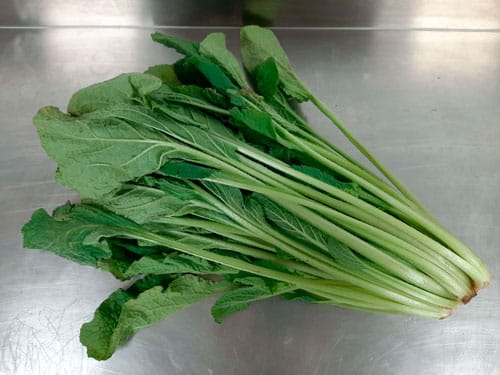
An agri-food company launched a revalorization of borage by-products project to introduce sustainability criteria into its production process and increase the utilization of waste generated during borage processing. The objective was to determine whether these by-products could be transformed into value-added ingredients through a technical strategy based on the identification and extraction of bioactive compounds.
Sustainable agri-food by-product valorization
The valorization of agri-food by-products requires assessing whether a waste stream can be converted into a secondary raw material with real applications in other industries. In this case, the starting point was to study the composition of plant residues derived from borage processing.
The initial analysis had to consider the concentration of target compounds, their stability after industrial processing, and the feasibility of their recovery. Not all by-products present a suitable profile for reintroduction into the value chain, making it necessary to apply both technical and economic criteria in selecting the target compound.
Plant-based waste can become high-value raw materials when bioactive compounds are properly identified.

Furthermore, the decision could not rely solely on the presence of bioactive molecules, but also on their market potential. Potential applications were analyzed in functional food, nutraceutical, cosmetic, and pharmaceutical sectors, where specific antioxidant compounds show increasing demand. Technical feasibility had to be aligned with a real economic opportunity.
This approach enabled valorization to be addressed from a strategic perspective, avoiding experimental pathways without industrial orientation.
Circular economy in the food industry
The project was integrated into a circular economy strategy within the food industry, where the objective is to maximize resource efficiency and reduce the generation of non-valorized waste.
From a technical perspective, this involves transforming secondary process streams into new sources of raw materials. From a business standpoint, it means reducing costs associated with waste management and potentially opening new business lines.
For this transition to be viable, quantitative data supporting decision-making is essential. It is not sufficient to assume that a plant-based residue may have value; this must be demonstrated through comparative analysis and rigorous quantification of the compounds present.
In this case, the client required objective information to assess whether integrating an extraction process would be technically and economically justifiable within their production model.
Extraction and quantification of polyphenols in plant residues
Following a preliminary assessment of potential bioactive compounds, polyphenols were selected due to their recognized antioxidant capacity and broad industrial applicability. However, the extraction and quantification of polyphenols in plant residues involves considerable technical complexity.
Polyphenols may be unevenly distributed across different parts of the plant, requiring each fraction of the residue to be analyzed separately. In addition, their stability can be affected by factors such as temperature, pH, and exposure to oxygen during processing.
Process viability depends on both extraction efficiency and reliable compound quantification.
The challenge was to design a procedure capable of maximizing compound recovery without compromising chemical integrity. At the same time, a sensitive analytical method was required to compare different extraction conditions and determine which provided the highest performance.
Ultimately, the objective was not only to demonstrate the presence of polyphenols, but to experimentally validate their recovery potential under realistic conditions.
How was it addressed or what was the solution?
INFINITIA addressed the project through a structured methodology combining literature review, experimental development, and statistical analysis, integrating the team’s prior expertise with industrial applicability criteria.
Technical strategy for bioactive compound extraction
The first stage consisted of an extensive review of scientific literature and previous projects related to the extraction of phenolic compounds in similar plant matrices. This phase made it possible to identify technologies and approaches with demonstrated efficiency.
Based on this foundation, an extraction strategy specifically adapted to borage by-products was defined. Different solvents, solid-to-liquid ratios, and process conditions were evaluated, considering variables such as yield, compound stability, and potential scalability.
The experimental design included multiple scenarios in order to compare alternatives under homogeneous criteria. This approach avoided decisions based on a single trial and generated a solid comparative basis for selecting the most advantageous option.
The team’s experience was essential in adapting theoretical knowledge to a practical environment, adjusting parameters to reproducible conditions aligned with future industrial development.
Optimization of the Folin-Ciocalteu Method
To quantify total polyphenol content, the Folin-Ciocalteu method was selected, a technique widely validated for plant-based matrices. However, its correct application requires specific adjustments depending on the sample type.
Optimization included calibration using reference standards, development of calibration curves, and standardization of reaction times and spectrophotometric reading conditions. These adjustments improved accuracy and reduced variability between assays.
Method repeatability was also verified through replicated analyses, ensuring the reliability of the results obtained. This step was essential for comparing different extraction conditions and establishing conclusions supported by quantitative evidence.
Having a robust analytical methodology made it possible to convert experimental data into strategic information useful for the client.
Experimental analysis of natural antioxidants
Once the methodology was defined, a structured experimental plan was implemented to evaluate different parts of the plant residue and various extraction conditions. Each assay was designed to generate comparable and statistically analyzable data.
Statistical data processing enabled the identification of significant differences between samples and the selection of the alternative with the highest polyphenol yield. This analysis not only determined the optimal extraction condition, but also identified the residue fraction with the greatest valorization potential.
Statistical analysis transforms experimental data into industrial decision-making.
The results confirmed that borage by-products contain high levels of polyphenols, positioning them as a viable source of natural antioxidants for various industrial applications.
The study transformed an initial hypothesis into quantified technical validation, providing the client with an objective basis to move forward with the integration of valorization strategies into their production model.