

What was the challenge or problem to solve?
The challenge faced by the Forensic Engineering team at INFINITIA was to identify the cause of failure in a part made of a multilayer composite material with a “sandwich” structure, where the defect was due to poor adhesion between two of the layers. This issue manifested as deformations on the surface of the part, detected during the client’s quality control process.
 The project’s objective was twofold: first, to understand why this lack of adhesion and the resulting deformations occurred, and second, to implement solutions to prevent the recurrence of these failures in future productions.
The study focused on a thorough analysis of the materials involved and the processes they underwent during manufacturing. The part in question was used in applications where aesthetic and structural integrity were crucial, making it imperative to get to the root of the problem. The challenge lay in correlating the behaviour of the materials and the manufacturing processes with the observed failure.
 How was it addressed or what was the solution?
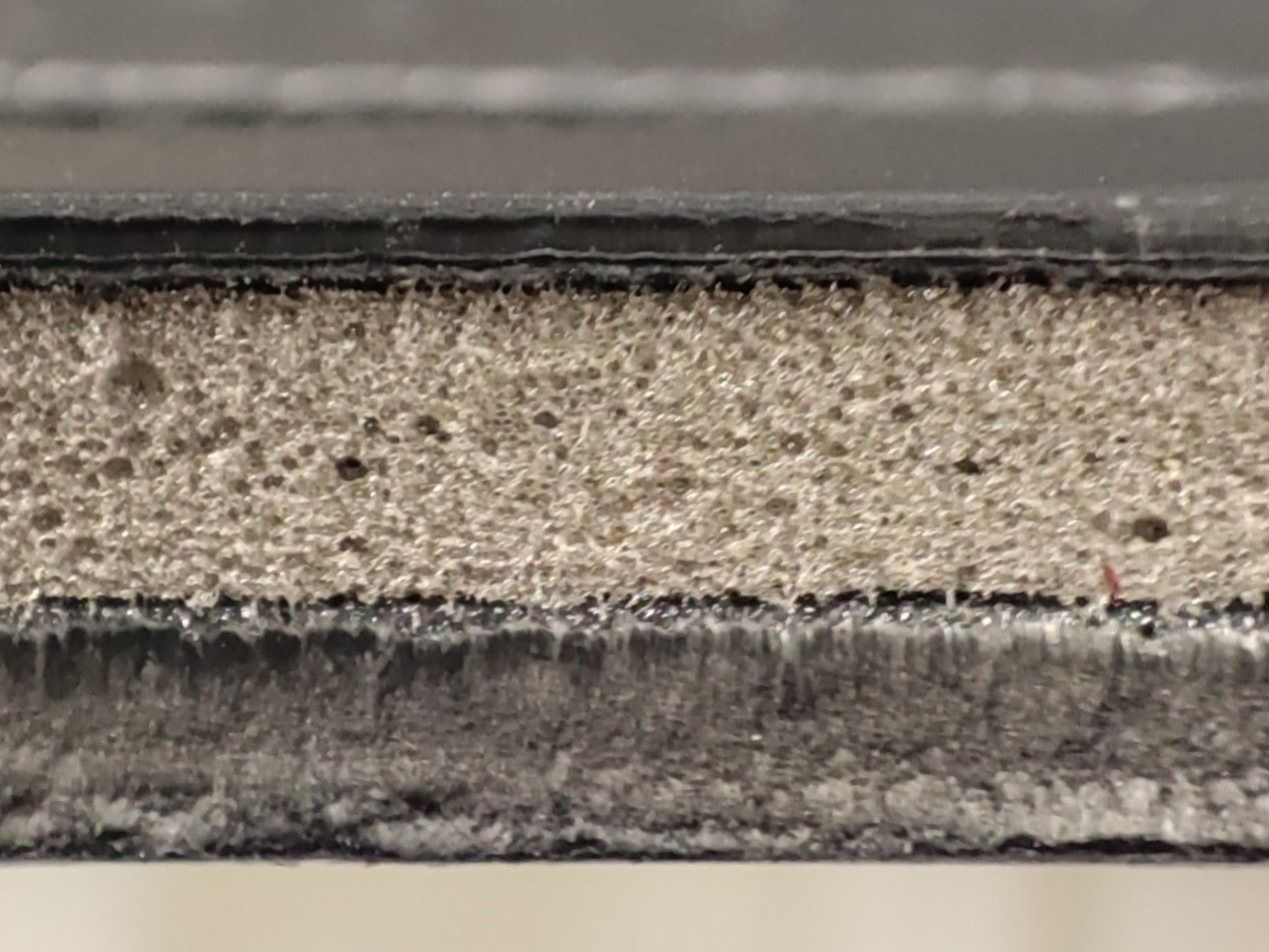
The investigation process began with a visual inspection using high-quality photographs to detect any surface irregularities that could indicate underlying issues in the material’s homogeneity, such as inclusions or defects not visible to the naked eye. This initial step was crucial for establishing specific areas of focus for more detailed analyses.
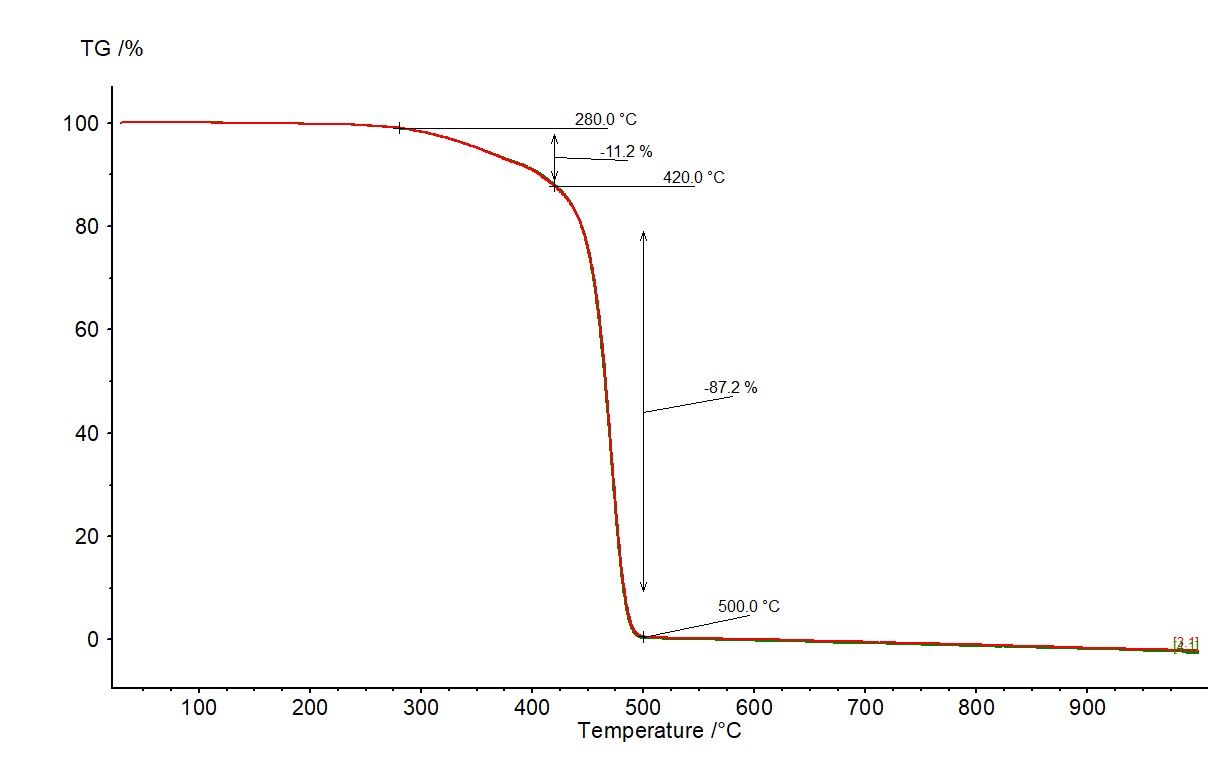
Subsequently, a comparative analysis of the materials was conducted using advanced laboratory techniques to identify significant differences in the composition of the defective sample versus a reference sample that did not exhibit the failure. This analysis sought evidence to justify the causes of the observed poor adhesion.
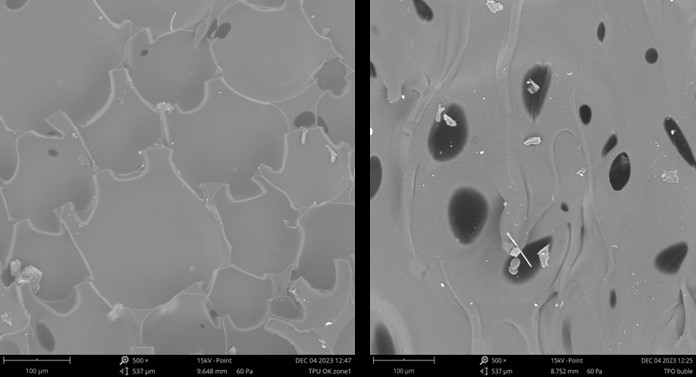
The final step involved a detailed microscopic analysis using a scanning electron microscope. This examination focused on the size and shape of the foams in both samples, which is essential to understand the distribution and uniformity of the foamed material that forms part of the “sandwich” structure.
The conclusion of the study pointed to one of the manufacturing process parameters not being optimal. This information allowed the client to optimize the process, achieving better cohesion between the materials and ensuring the integrity of the parts in future productions. This solution not only resolved the specific problem but also improved the overall quality of the final product.