
Railway accident and analysis of failures and infrastructure: a technical perspective from materials engineering
By INFINITIA · Specialists in failure analysis and forensic engineering
Train accident in Córdoba: facts and status of the technical investigation
On January 18, 2026, near Adamuz (province of Córdoba), a serious railway accident occurred after a high-speed train derailed, subsequently invading the opposite track and colliding with another train.
The train that caused the derailment, operated by Iryo and covering the route from Malaga to Madrid, lost stability when passing through a point in the infrastructure where, according to initial technical hypotheses, there may have been a prior fracture in the rail associated with a railway weld. As a result of the loss of continuity of the track, the train crossed over to the adjacent track, colliding with a Renfe Alvia train traveling in the opposite direction, Madrid–Huelva.
The accident caused 45 fatalities and hundreds of injuries, making it one of the most serious railway accidents in Spain in recent decades. Rescue efforts, victim care, and removal of rolling stock continued for several days.
The technical investigation is being carried out by the Railway Accident Investigation Commission (CIAF), which has conducted a thorough inspection of both the railway infrastructure and the rolling stock involved. The main actions taken include:
Initial findings indicate the presence of notches on the right wheels of several cars, with a geometric pattern consistent with impacts against the rail head in an area where structural continuity may have been compromised. According to the CIAF’s provisional working hypothesis, the rail fracture could have occurred prior to the passage of the train involved in the accident.
Materials engineering and failure analysis in railway accidents
From the perspective of materials forensic engineering and railway failure analysis, this type of event must be addressed with technical rigor and a comprehensive approach. Experience shows that, in most cases, there is no single cause, but rather a combination of factors that interact over time until the system reaches a critical state.
In railway infrastructure, materials and their joints are subject to high mechanical stresses, repeated cyclic loads, thermal variations, and demanding environmental conditions. In this context, small initial defects—whether due to manufacturing, execution, assembly, or degradation in service—can evolve progressively without manifesting externally for long periods of time.
Failure analysis allows us to reconstruct this evolution, identifying how and why seemingly localized damage can trigger major consequences. To do this, it is essential to integrate material behavior, joining processes, operating conditions, and inspection and maintenance systems, avoiding partial interpretations or excessive simplifications.
Addressing these accidents from a materials engineering perspective does not involve searching for an immediate cause, but rather understanding the set of mechanisms that have been involved, with the aim of extracting solid technical lessons that can be applied to improving the safety and reliability of railway infrastructure.
Rail welds as critical points in railway infrastructure
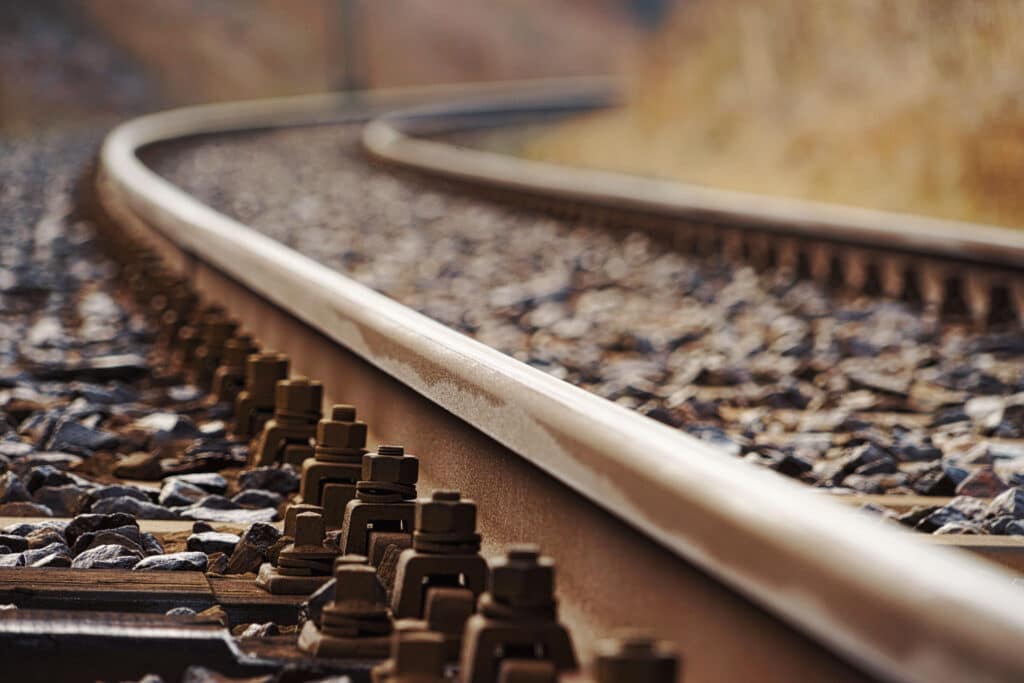
Rail welds, whether aluminothermic or arc welds, are one of the most sensitive elements of continuous welded track, as they act as joints between sections of rail subjected to particularly demanding service conditions. From a materials engineering perspective, these joints bring together a combination of factors that make them critical areas within the railway infrastructure.
Welds are subject to both microstructural changes resulting from the joining process itself and the heat-affected zone (HAZ), and the presence of thermal residual stresses generated during cooling. Added to this is the possible existence of non-visible internal defects, such as porosity, inclusions, or areas of incomplete fusion, which can act as starting points for damage.
Furthermore, during railway operation, these joints are subject to high cyclic mechanical stresses associated with repeated train passage, dynamic loads, and environmental temperature variations. This combination of factors makes the weld particularly sensitive to fatigue mechanisms and the progressive development of microdefects.
For this reason, a failure in a rail weld is rarely instantaneous or unpredictable. What usually occurs is a progressive evolution of the damage, with a localized origin that can remain latent for long periods, until the growth of the defect reaches a critical state and failure occurs.
Possible causes of rail weld failure
Based on experience in welding failure analysis, rail fractures are not usually caused by a single isolated factor. In most cases, the failure is the result of the interaction of several mechanisms, which may coexist or act sequentially over time. These causes can be broadly grouped into the following categories.
Welding defects
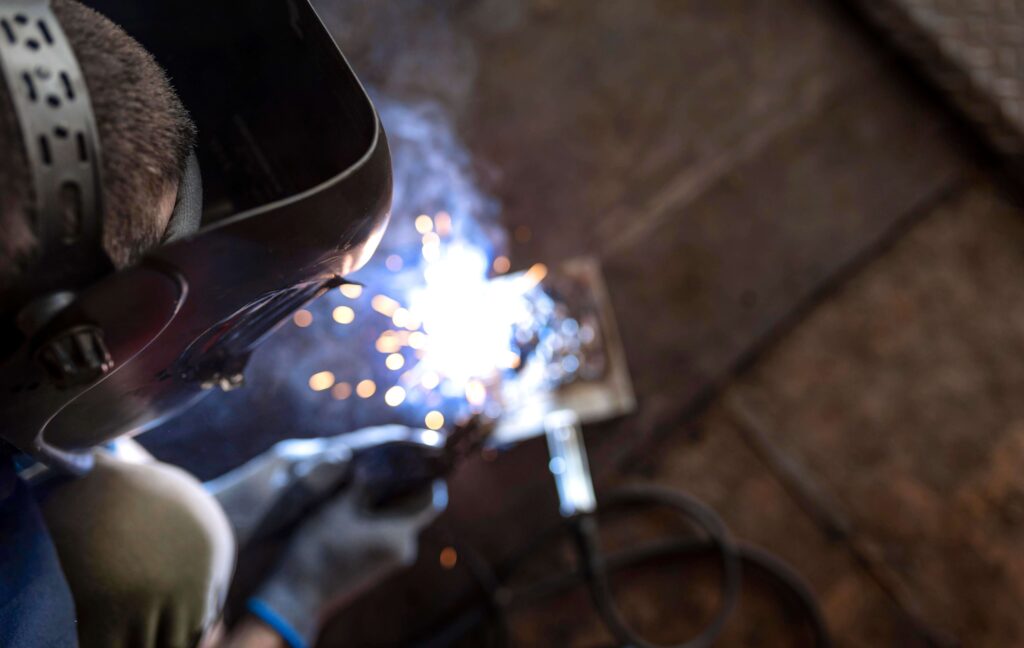
Defects introduced during the welding process are one of the most common causes of rail failure. These include lack of penetration or partial fusion, as well as the presence of slag inclusions, porosity, or internal cracks, which may not be detectable by visual inspection.
These types of defects are usually associated with inadequate joint preparation, errors in the formulation or application of the flux, incorrect heating times, or uncontrolled cooling. Although they may not initially compromise service, these defects act as stress concentrators, facilitating the initiation of cracks under load.
Residual stresses and distortions
Residual stresses generated during the welding process play a critical role in the in-service behavior of the joint. Uncontrolled cooling, premature destacking, or forced assembly can lead to high stress fields, even in the absence of significant geometric defects.
These stresses, superimposed on operational loads, promote the initiation and propagation of fatigue cracks, or may even trigger sudden fractures when critical load or temperature conditions are reached. Proper thermal and mechanical management of the weld is therefore a key aspect of rail integrity.
Fatigue and microcrack growth
In service, rails are subjected to repeated cyclic loads, which can reach millions of cycles over their service life. In this context, a microcrack initiated in the weld zone, whether due to a previous defect or residual stresses, can grow progressively through fatigue mechanisms.
This growth is usually slow and stable over long periods, with no obvious external manifestations, until the resistant section is reduced enough to cause the complete breakage of the rail. This behavior explains why many failures appear suddenly, when in fact they are the result of a prolonged degradation process.
Environmental and maintenance factors
Environmental conditions and maintenance practices significantly influence the durability of railway welds. General corrosion or stress corrosion, especially in aggressive environments, can accelerate material degradation and promote crack initiation.
Likewise, the progressive wear of the weld or the partial opening of the joint due to rail traffic can alter the load distribution, increasing local stresses and reducing the resistance capacity of the joint. The absence of periodic inspections appropriate to the operating conditions can allow these processes to progress until they reach a critical state.
What does metallographic analysis contribute to a railway weld failure?
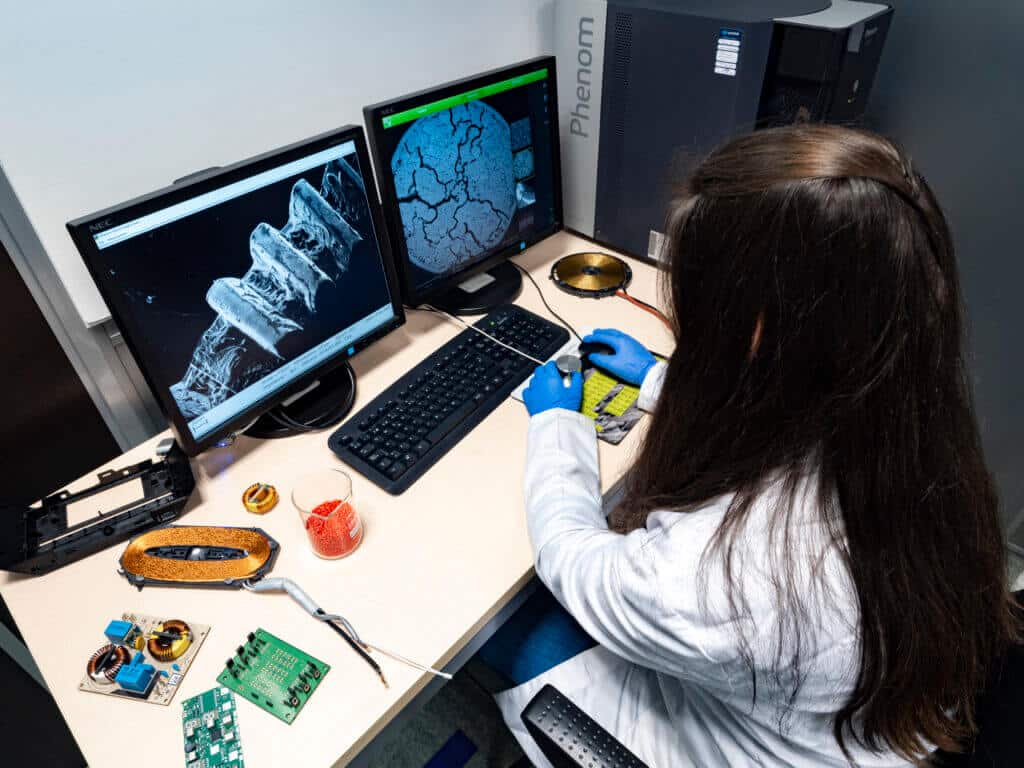
Metallographic analysis, both on a macroscopic and microscopic scale, is one of the most important tools for understanding the actual fracture mechanism in a railroad weld and for accurately locating the crack nucleation zone.
The study of the macrostructure allows evidence to be identified that provides an initial overview of the failure, such as the presence of cracks prior to final fracture, porosity or slag inclusions associated with the welding process, areas of incomplete fusion or alterations in the heat-affected zone (HAZ) that reflect inadequate thermal cycles during the execution of the joint.
Through optical microscopy, it is possible to delve deeper into the behavior of the material at the microstructural level and determine the type of fracture involved—whether brittle, ductile, or a combination of both —, as well as detect the presence of intergranular microcracks, often associated with stress corrosion phenomena. Likewise, microstructural analysis allows the identification of undesirable transformations, such as the formation of martensite, decarburization processes, or the appearance of brittle structures, which may be indicative of incorrect heat treatments or inadequate cooling rates.
The integration of the information obtained through these analyses is essential to differentiate with technical rigor whether the rail breakage was caused by fatigue, point overload, manufacturing or workmanship defects, or environmental degradation processes, providing a solid basis for subsequent root cause analysis and informed technical decision-making.
Root cause analysis and Ishikawa approach in railway welding
In complex technical investigations, such as those associated with railway infrastructure failures, it is essential to have tools that allow for the systematic ordering, structuring, and analysis of the possible factors that contributed to the failure. In this context, root cause analysis (RCA) supported by tools such as the Ishikawa diagram is a widely used approach in forensic engineering.
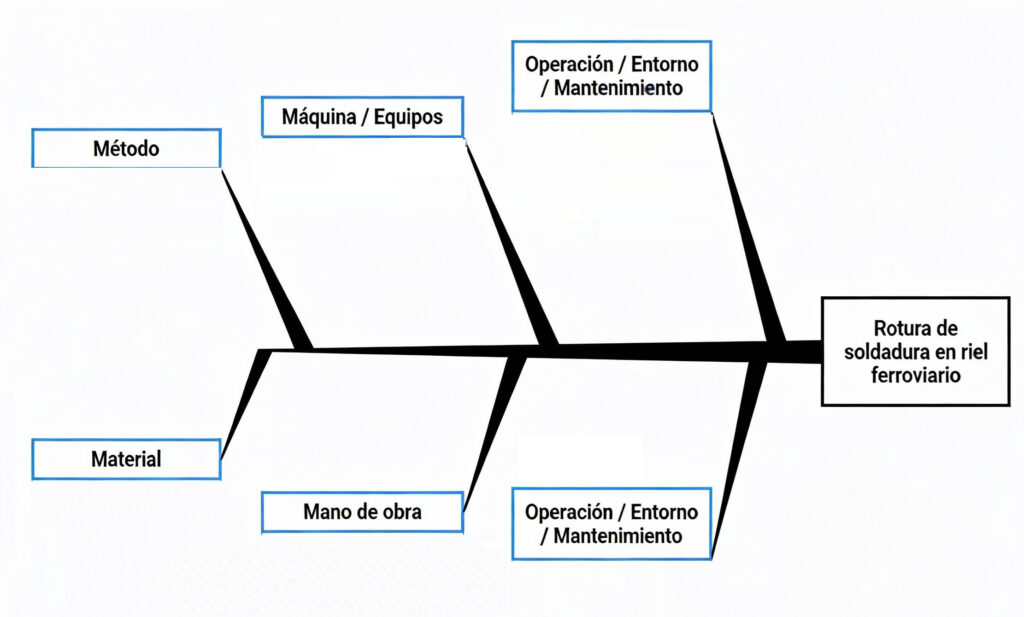
Applied to the breakage of a weld on a railroad rail, this approach allows the possible causes of the failure to be identified and classified into different blocks, facilitating the formulation of coherent technical hypotheses and their subsequent validation through objective testing and analysis. Far from providing immediate answers, the Ishikawa diagram acts as a tool to support technical reasoning, helping to avoid partial approaches or excessive simplifications.
As a guideline, the following causes, among others, can be considered in the analysis of a railroad weld:
- Method: incorrect welding execution, inadequate temperatures during the process, uncontrolled cooling, or deviations from established procedures.
- Material: rail steel with inclusions or segregations, filler material outside specifications, or hardness mismatches between the rail and the welded area.
- Machinery/Equipment: poorly calibrated welding or preheating equipment, parameter control failures, or inadequate or out-of-service inspection systems.
- Labor: lack of specific training, errors in field execution, staff fatigue, or insufficient process supervision.
- Assembly/Design: misalignment of rails, stresses associated with thermal expansion, or track designs that concentrate forces in the weld area.
- Operation/Environment/Maintenance: heavy traffic, occasional overloads, severe weather conditions, corrosion, or lack of periodic inspections using techniques such as ultrasound or visual inspection.
The correct use of this approach allows the various factors identified to be linked together, hypotheses to be prioritized, and subsequent analyses to be directed towards those causes with the highest technical probability, contributing to a more robust and well-founded diagnosis of the failure.
Example of an Ishikawa diagram
This diagram does not represent the official analysis of the accident and is included for informational purposes only.
Evidence-based prevention and a comprehensive view of the system
Beyond identifying the ultimate cause of a specific failure, this type of accident reinforces the need to critically review railway inspection and maintenance systems and their actual ability to detect defects before they reach a critical state, especially in such sensitive elements as rail welds.
In many cases, the challenge lies not in the absence of controls, but in the limitations inherent in the inspection techniques used, the frequency of inspections, or the technical interpretation of the results obtained. Incipient defects can remain latent for long periods if there are no adequate methodologies or clear criteria for assessing their evolution.
Added to this is a key aspect of long-life infrastructure: operating conditions change over time. Increases in traffic, variations in axle loads, changes in speed regimes, modifications in environmental conditions, or the introduction of new rolling stock can cause the initial design and maintenance requirements to become partially misaligned with the current operational reality.
For this reason, effective prevention requires adopting a comprehensive view of the system, in which the material, bonding processes, operation, maintenance, and actual context of use of the infrastructure are analyzed together. This global approach avoids partial analyses or those that are overly focused on a single factor, which could lead to incomplete diagnoses.
In this context, prevention is not limited to detecting existing defects, but involves a periodic review of design criteria, acceptance thresholds, and maintenance strategies, incorporating accumulated experience and the results of failure analyses. A good diagnosis, the redefinition of requirements based on the evolution of the system is part of a logic of continuous improvement, which is common in the management of complex systems and especially relevant in critical infrastructures.
From this perspective, failure analysis ceases to be a reactive tool and becomes a driver of continuous improvement, in which each incident or deviation provides valuable information for adjusting procedures, strengthening controls, and adapting the system to new operating conditions. This technical learning cycle, based on a comprehensive and unbiased view, is key to progressively reducing risk and increasing long-term safety and reliability.
Our respect and recognition
At INFINITIA, we would like to express our condolences to the victims and our support for their families, as well as our appreciation to the professionals who, from different technical and operational fields, are working rigorously and impartially to analyze this event.
The content of this article is based exclusively on publicly available information at the time of writing and on INFINITIA’s technical expertise in failure, materials, and welding analysis. The considerations presented are technical and informative in nature and do not constitute definitive conclusions about the accident described, nor do they seek to assign blame.