
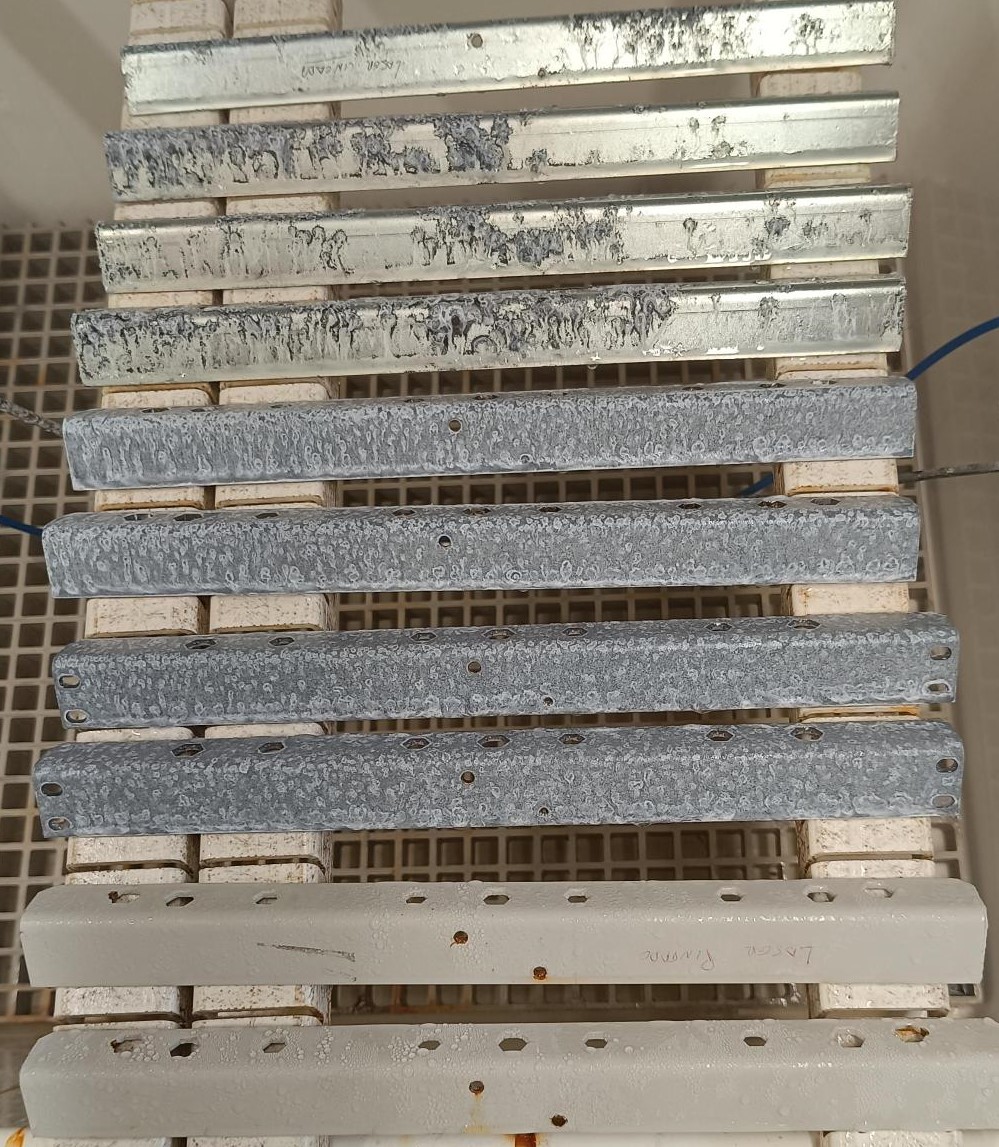

What was the challenge or problem to be solved?
In industrial environments, metal parts testing is essential to validate the behavior of components under demanding conditions. However, standard tests do not always faithfully reproduce the actual operating environment, which introduces uncertainty in decision-making, especially when performance is critical.
Given this limitation, the need arose to develop customized tests capable of simulating real operating conditions, including variables such as flow, particles, or usage cycles. The goal was not only to measure, but to generate relevant technical information that would enable more reliable and useful validation for decision-making.
Evaluating metal parts testing under real operating conditions
The starting point of the project was the need to evaluate the behavior of different metal parts under conditions that could not be reproduced through conventional testing. Although the parts met dimensional and material requirements, there was uncertainty about their performance under real operating conditions.
Metal parts testing in the laboratory is typically based on standardized norms which, while useful as a reference, do not always capture the complexity of the operating environment. In this case, factors such as fluid interaction, the presence of particles, or variability in operating conditions introduced an additional level of demand.
The difference between a standard test and a representative one can determine the reliability of the component in service.

Furthermore, the inability to simulate these conditions using conventional methods limited the capacity to anticipate potential failures or degradation. This created a risk associated with product validation, as field behavior could differ significantly from laboratory results.
For this reason, the need arose to design a test environment capable of reproducing these conditions in a controlled manner. This approach would yield more representative and comparable data, enabling a more accurate evaluation of the behavior of metal parts.
Product validation through customized metal parts testing
The project’s objective focused on establishing a product validation process based on results obtained under representative operating conditions. This approach made it possible to go beyond simple specification verification, incorporating a more applied perspective on component behavior.
Validation through customized testing involved designing a procedure adapted to the client’s specific needs. This included defining critical variables, selecting test conditions, and interpreting results based on their impact on the final application.
From an operational perspective, having information obtained under realistic conditions reduced uncertainty in decision-making. This is especially relevant in contexts where a component failure can have significant consequences in terms of cost or safety.
In addition, this approach contributed to optimizing internal processes, facilitating the selection of more robust designs and reducing the need for subsequent iterations. Validation based on representative testing thus became a strategic tool for improving product reliability.
Design of test setups for complex metal parts testing
The main challenge of the project lay in the design of test setups capable of reproducing complex operating conditions in a controlled manner. Unlike standardized tests, this case required a specific adaptation to variables that are not usually covered by conventional standards.
Developing a customized setup involved defining parameters such as flow rate, temperature, the presence of particles, or operating cycles. The correct combination of these variables was critical to ensuring the representativeness of the test. An inadequate design could lead to unreliable or difficult-to-interpret results.
A poorly designed setup can compromise the validity of the entire testing process.
It was also necessary to ensure the repeatability of results. This required rigorous control of experimental conditions, as well as a stable configuration of the test system. The consistency of the environment was as important as its simulation capability.
From INFINITIA’s perspective, this challenge was approached as an applied engineering problem in validation. The key was to balance precision, experimental control, and representativeness, ensuring that the test provided useful information for decision-making without introducing additional biases or uncertainties.

How was it addressed or what was the solution?
The solution was developed from an approach oriented toward generating relevant information for product validation. Rather than applying standard methodologies, the decision was made to design a testing system fully adapted to the client’s context. This approach allowed the analysis to focus on the critical variables of the process.
The project was approached as a customized testing exercise, in which every technical decision was aimed at maximizing the representativeness of the test. The objective was to reproduce real operating conditions in a controlled environment, while ensuring the repeatability and comparability of results. This approach made it possible to avoid generic tests with low applicability, prioritizing the generation of useful data for decision-making. The solution developed not only addressed an immediate need, but also laid the groundwork for future validation processes.
Simulating real conditions in metal parts testing
The solution was grounded in the simulation of real operating conditions through the development of a specific testing system. This approach made it possible to reproduce key variables of the operating environment in a controlled manner, such as fluid flow or particle interaction.
Controlled simulation is an essential element in metal parts testing, as it allows the observation of behaviors that do not manifest under standard conditions. This includes phenomena such as wear, degradation, or performance loss that only appear under certain conditions.
The design of the test system was oriented toward maintaining these conditions in a stable manner throughout the entire process. This is fundamental to ensuring the reliability of results and reducing experimental variability.
Reproducing the real environment in the laboratory allows the behavior of the product in service to be anticipated.
This approach yielded representative data on the behavior of the parts, enabling a more accurate interpretation of results and their direct application in the validation process.
Execution of a customized test bench by a specialized team
The project development involved the creation of a customized test bench, specifically designed to reproduce the required conditions. This system made it possible to integrate various control and monitoring elements, ensuring the stability of the test.
INFINITIA’s team, specialized in materials characterization and experimental development, was responsible for defining and executing the test. Their involvement made it possible to adapt the setup design to the specific needs of the project, ensuring the quality of the process.
The execution included the preparation of the parts, the configuration of the test system, and the monitoring of behavior during testing. Each of these stages is critical to ensuring the validity of the results.
Furthermore, the approach adopted allowed the test to be adjusted based on the results obtained. This iterative capability is characteristic of customized testing, where the design evolves to improve the quality of the information generated.
Benefits of metal parts testing in product validation
The development of the test made it possible to establish a solid foundation for product validation, based on the real behavior of metal parts. This outcome provides direct value to the decision-making process.
One of the main benefits was the ability to evaluate the performance of parts under representative conditions, identifying potential limitations or risks associated with their use. This allows failures to be anticipated and the reliability of the final product to be improved.
In addition, metal parts tests carried out using a customized setup yield information that is not available in technical specifications. This facilitates a deeper understanding of the component’s behavior.
The approach adopted contributed to reducing uncertainty in decision-making by providing relevant experimental data. In the medium term, this methodology allows product design to be optimized and more robust internal criteria to be established for its validation.
